Flag Burkina Faso: Meaning, Colours, History and the Symbolism of the Yellow Star
The flag Burkina Faso is a distinctive national emblem that represents the history, identity and aspirations of this West African country. Recognised by its two horizontal bands of red and green, together with a bright yellow five-pointed star in the centre, the flag has a design that is both simple and meaningful. Each element contributes to its visual identity, helping distinguish Burkina Faso from other African nations while reflecting the political transformation that shaped the country’s modern history.
Understanding the flag Burkina Faso provides a fascinating introduction to the country’s national symbols and historical background. Adopted on 4 August 1984, the current design emerged during a period of revolutionary change under the leadership of Thomas Sankara. The country also changed its name from Upper Volta to Burkina Faso during this period. Today, the flag remains an important national symbol, appearing at official ceremonies, cultural gatherings, sporting events and international occasions where the country is represented.
What Does the Flag of Burkina Faso Look Like?
The flag Burkina Faso consists of two equal horizontal stripes, with red occupying the upper half and green filling the lower half. A yellow five-pointed star sits at the centre, crossing the boundary between the two coloured bands. The arrangement creates a balanced appearance that is easy to recognise, even when the flag is displayed from a distance. Its standard width-to-length ratio is 2:3, meaning the flag’s length is one and a half times its height.
Although the design uses only three colours and one central symbol, these elements work together to communicate a powerful national identity. The red and green stripes provide a clear visual contrast, while the yellow star draws attention to the centre of the flag. When reproducing the flag Burkina Faso for educational materials, websites, printed decorations or presentations, maintaining the correct colour order and star placement is essential. Accurate proportions help preserve the recognised appearance of this important national emblem.
Meaning of the Red, Green and Yellow Colours
The colours of the flag Burkina Faso are associated with themes of revolutionary struggle, agricultural abundance and national aspirations. Red is commonly interpreted as representing the revolution and the sacrifices made during the country’s historical struggles. It reflects determination, political change and the pursuit of a different national future. These associations connect the upper stripe with the period in which the present flag was introduced, giving the colour historical significance beyond its striking appearance.
Green is associated with the country’s agricultural resources, fertile land and hopes for prosperity. Agriculture remains an important part of life in Burkina Faso, making the colour particularly relevant to the relationship between people, land and livelihoods. Yellow appears in the central five-pointed star and is associated with the guiding principles of the revolutionary period. Together, the colours of the flag Burkina Faso communicate ideas of determination, hope and national development. Interpretations should be understood within their historical context, as the precise explanations of national symbols can vary between sources.
History of the Flag of Burkina Faso
The history of the flag Burkina Faso is closely linked to the country’s transition from its former identity as Upper Volta. Before the current flag was introduced, Upper Volta used a different national design consisting of three horizontal stripes in black, white and red. The country gained independence from France in 1960 and retained the name Upper Volta for more than two decades. Its earlier flag represented a different period in the country’s political development and remains an important part of its national history.
On 4 August 1984, the country adopted its present flag during the revolutionary government led by Thomas Sankara. This change accompanied the renaming of Upper Volta as Burkina Faso, a name commonly translated as Land of Upright People. The new national emblem reflected the political ideals and ambitions associated with this transformation. The flag Burkina Faso therefore represents more than a change in visual design; it marks a significant moment when the country adopted a new name, a new symbolic identity and a different vision of national progress.
What Does the Yellow Star Represent?
The yellow star is the central feature of the flag Burkina Faso and provides its most immediately recognisable detail. Its five points and central position distinguish the design from many other national flags that use horizontal stripes. The star crosses the boundary between the red and green bands, visually connecting the two colours. Its bright yellow appearance also creates a strong contrast against the surrounding stripes, ensuring that it remains the focal point of the national emblem.
The star is associated with the guiding principles of the revolution that accompanied the adoption of the flag in 1984. It represents the ideological direction and aspirations linked to that historical period. More broadly, stars are frequently used in national flags to communicate ideas such as unity, guidance and shared ambition, although their meanings differ between countries. In the flag Burkina Faso, the yellow star connects the overall design with the political transformation that shaped the nation’s modern identity and provides a visual reminder of the ideals associated with its adoption.
Why Does Burkina Faso Use Pan-African Colours?
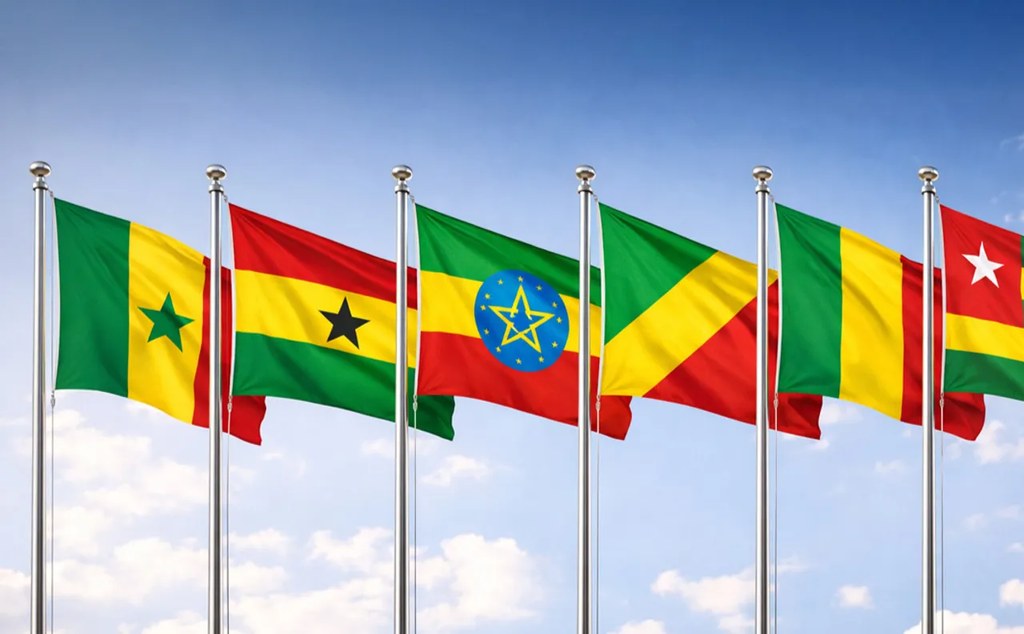
The flag Burkina Faso features red, green and yellow, a combination widely associated with Pan-African identity and solidarity. These colours appear in the flags of several African countries, reflecting historical connections with independence movements, self-determination and the development of national identities. However, sharing a colour scheme does not mean that every country assigns identical meanings to its flag. Each national emblem has its own history, and the symbolism of its colours should be understood in relation to the events and traditions that shaped its adoption.
Pan-African colours also provide a visual connection between countries with different languages, cultures and political histories. In Burkina Faso, the use of red, green and yellow forms part of a national design introduced during a period of significant political change. The flag Burkina Faso combines these familiar colours in a distinctive arrangement, with two horizontal bands and a central yellow star. This design allows the country to express its individual national identity while sharing a broader visual language associated with African heritage, solidarity and aspirations for the future.
Burkina Faso Flag Compared with Other African Flags
The flag Burkina Faso shares certain visual features with the flags of other African nations, including Ghana, Guinea and Cameroon. Ghana’s flag also uses red, yellow and green, but its central black star creates a different visual identity. Guinea uses red, yellow and green in vertical stripes, while Cameroon features green, red and yellow vertical bands with a yellow star in the centre. These comparisons demonstrate how similar colours can be arranged in different ways to represent distinct national histories and identities.
The main distinguishing feature of the flag Burkina Faso is its horizontal red and green bands, combined with a yellow star placed in the middle. Its design is straightforward, but the placement of the colours and symbol makes it readily identifiable. Comparing African national flags can help students, travellers and geography enthusiasts learn about the continent’s political history and cultural diversity. It also highlights the importance of examining individual flag designs rather than assuming that countries using similar colours necessarily share the same historical experiences or symbolic interpretations.
Official Design, Proportions and Flag Display
The standard proportions of the flag Burkina Faso are 2:3, with the red stripe above the green stripe and the yellow star centred on the boundary between them. These proportions provide a useful reference for artists, educators, designers and organisations creating accurate representations of the national emblem. When producing a digital illustration or printed flag, the position and shape of the star should be carefully maintained. Changing the order of the colours or placing the star incorrectly can make the reproduction inconsistent with the recognised national design.
The flag may be displayed at public ceremonies, educational events, sporting competitions and international gatherings. Respectful presentation involves using an accurate design and keeping the physical flag in suitable condition. For websites and educational publications, high-quality images can help readers recognise the flag’s features clearly. Anyone creating a graphic of the flag Burkina Faso should consult a reliable reference for official design details, particularly when exact colour specifications or production measurements are required. Careful reproduction helps preserve the flag’s recognisable appearance across different formats and settings.
Burkina Faso Flag Emoji and Digital Uses
The flag Burkina Faso also has a digital representation: the 🇧🇫 emoji. This symbol allows people to identify the country quickly in messages, travel discussions, social media posts and online educational resources. It is especially useful when writing about geography, international sporting events, West African culture or national celebrations. Rather than displaying a full-sized illustration, the emoji provides a compact symbol that can fit naturally within a sentence, heading or digital profile.
The appearance of the emoji may vary slightly between devices, operating systems and applications because each platform determines how its symbols are rendered. Nevertheless, it is intended to represent the national flag of Burkina Faso. Readers who need a larger image for a website, classroom presentation or printed project should use a suitable high-resolution flag graphic instead. The emoji is convenient for everyday communication, while a full image provides greater detail when the flag Burkina Faso needs to be examined, reproduced or presented as a central visual element.
The Importance of the Flag in Burkina Faso Today
The flag Burkina Faso remains a recognisable representation of the country at home and abroad. It appears in official settings, public gatherings, cultural events and international competitions, helping identify the nation wherever its representatives participate. National flags often serve as shared symbols that connect people with a country’s history and collective identity. In Burkina Faso, the current design also recalls the political transformation of 1984 and the adoption of a new national name during Thomas Sankara’s leadership.
The flag’s significance extends beyond its colours and geometric arrangement. It provides an opportunity to explore the country’s agricultural heritage, revolutionary history and place within the wider African community. For students, travellers and readers interested in world geography, learning about the flag Burkina Faso offers a starting point for understanding the relationship between national symbols and historical change. Although people may interpret national emblems in different ways, the flag remains an enduring visual marker of the country and an important part of how Burkina Faso is represented internationally.
Conclusion
The flag Burkina Faso combines a red upper stripe, a green lower stripe and a central yellow five-pointed star to create a distinctive national emblem. Adopted on 4 August 1984, it emerged during a period of political transformation when the country changed its name from Upper Volta to Burkina Faso. Its design reflects historical associations with revolutionary ideals, agricultural abundance and national aspirations, while its colours also connect it with the wider tradition of Pan-African symbolism.
Learning about the flag Burkina Faso reveals how a simple design can carry layers of historical and cultural significance. From the meaning of its colours to the symbolism of its yellow star, every element contributes to its recognisable identity. Whether encountered on a national building, at a sporting event or within an educational resource, the flag provides a useful introduction to Burkina Faso’s past and present. Understanding its history helps readers appreciate the important role national symbols play in expressing identity, preserving historical memories and representing countries around the world.
FAQs
What do the colours of the flag Burkina Faso mean?
Red is associated with revolutionary struggle, green with agricultural abundance, and yellow with the guiding principles represented by the central star.
When was the flag Burkina Faso adopted?
The current national flag was adopted on 4 August 1984.
What does the yellow star on the flag Burkina Faso represent?
The star represents the guiding principles of the Democratic and Popular Revolution associated with the flag’s adoption.
What was the former flag of Burkina Faso?
Before 1984, the country was known as Upper Volta and used a flag with black, white and red horizontal stripes.
What is the flag Burkina Faso emoji?
The national flag emoji is 🇧🇫, which is used in digital communication to represent Burkina Faso.
You May Also Read: Classification Keys Year 4