
Neil Burgess: Biography, Age, Career, Research and Achievements

Neil Burgess is a British neuroscientist whose work has contributed significantly to understanding memory, spatial cognition and navigation. As a Professor of Cognitive and Computational Neuroscience at University College London, he studies how different brain systems allow people to remember experiences, recognise locations and navigate through complex environments. His research combines theoretical ideas with experimental evidence, helping explain some of the most fascinating processes taking place within the human brain.
Over the course of his academic career, Neil Burgess has become particularly associated with research involving the hippocampus, episodic memory and spatial representation. His scientific approach draws upon computational modelling, behavioural experiments, neuropsychology, neuroimaging and neural recordings. By bringing these methods together, his research seeks to connect activity at the level of neurons and brain networks with recognisable human abilities such as remembering past experiences and finding a route through an environment.
Who Is Neil Burgess?
Neil Burgess is a prominent researcher in cognitive and computational neuroscience. He is based at the UCL Institute of Cognitive Neuroscience and leads the Space and Memory research group. His work investigates the neural mechanisms supporting memory and navigation, particularly the way the brain represents locations and experiences. This interdisciplinary focus has placed his research within important scientific discussions about how humans understand and remember the world around them.
There are several notable individuals named Neil Burgess, which can sometimes create confusion when searching for information online. The scientist discussed here is the British neuroscientist associated with University College London, rather than people sharing his name in acting, conservation or photography. His professional identity is strongly connected with research into hippocampal function, spatial cognition, episodic memory and computational models designed to explain how these cognitive processes operate.
Neil Burgess Age, Early Life and Education
Neil Burgess was born on 13 July 1966, making him 60 years old as of October 2026. His educational background is particularly interesting because his route towards neuroscience began through mathematics and physics. This quantitative foundation later became valuable for investigating complicated questions about brain activity, where mathematical models can help scientists develop and test explanations for how neural systems process, represent and retrieve information.
He studied mathematics and physics at University College London before completing doctoral research in theoretical physics at Manchester. Following a research fellowship in Rome, he returned to UCL and increasingly focused his attention on neuroscience. His background in physics and mathematics gave Neil Burgess a distinctive foundation for computational neuroscience, allowing him to combine theoretical modelling with experimental methods when investigating memory, navigation and the functions of interconnected brain regions.
Neil Burgess Career at UCL
University College London has played a central role in the academic career of Neil Burgess. He is Professor of Cognitive and Computational Neuroscience and works within the UCL Institute of Cognitive Neuroscience. His position allows him to operate at the intersection of psychology, neuroscience and computational research, where scientists attempt to understand complex cognitive abilities by combining carefully controlled experiments with detailed models of neural processing.
His leadership of the Space and Memory group reflects the central themes of his scientific career. Researchers within this area investigate how spatial locations are represented in the brain and how those representations interact with memory. Neil Burgess has also worked with researchers across different scientific disciplines, demonstrating how collaboration between experimental neuroscience, psychology, computational modelling and neuroimaging can provide a more complete understanding of sophisticated cognitive functions.
Neil Burgess Research and Scientific Contributions
A major focus of Neil Burgess research is the hippocampus, a brain structure strongly associated with memory and navigation. His work examines how neural activity can represent spatial locations and support an individual’s ability to move through an environment. By studying relationships between brain activity and behaviour, researchers can develop stronger explanations for how biological neural systems transform sensory information and previous experiences into useful representations of surrounding space.
Another important feature of his work is the combination of computational and experimental approaches. Mathematical models can generate predictions about how particular neural mechanisms should behave, while behavioural studies, brain imaging and neural recordings can test those predictions. Neil Burgess has used this interaction between theory and evidence to explore how individual neurons, larger neural networks and specific brain structures collectively contribute to spatial and episodic memory.
Neil Burgess and Spatial Memory
Spatial memory allows people to remember the positions of objects, recognise familiar environments and determine how to travel from one location to another. Neil Burgess has investigated the neural mechanisms underlying these abilities, particularly those involving the hippocampus and neighbouring brain regions. This research contributes to broader scientific attempts to understand how the brain creates internal representations that can guide behaviour even when immediate sensory information is incomplete.
Virtual reality has also provided valuable experimental opportunities for studying navigation and spatial memory. Controlled virtual environments allow researchers to manipulate landmarks, boundaries and other spatial information while observing participant behaviour and brain activity. Research associated with the UCL Space and Memory group has used such approaches to investigate how environmental information contributes to navigation, providing carefully controlled conditions for examining cognitive processes that would otherwise be difficult to isolate.
Neil Burgess and Episodic Memory
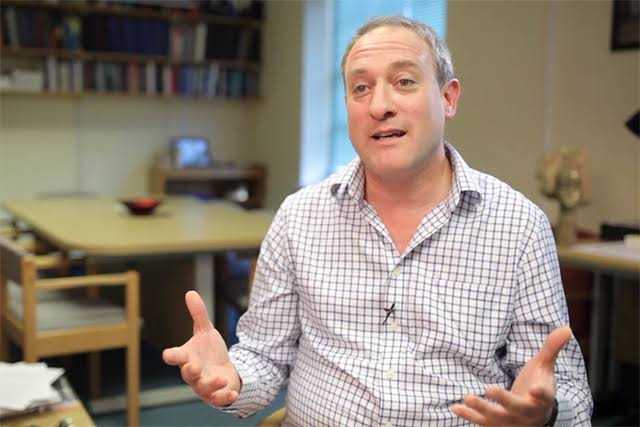
Episodic memory refers to the ability to remember events and experiences together with contextual information about where and when they occurred. This area is closely connected with the scientific work of Neil Burgess because the hippocampus contributes to both spatial processing and episodic memory. Studying these overlapping functions can help researchers understand how representations of locations may become integrated with information about experiences, people and events during memory formation.
His research has explored theoretical mechanisms through which stored experiences might later be reconstructed during remembering. Rather than treating memory as a simple recording system, modern neuroscience examines how different pieces of information can be combined when an event is recalled. Computational approaches are particularly useful here because they allow scientists to propose specific mechanisms and determine whether those mechanisms can reproduce patterns observed in behavioural experiments and neural activity.
Neil Burgess Publications and Achievements
Neil Burgess has produced an extensive body of academic research addressing spatial cognition, navigation, hippocampal function and memory. His publications include theoretical work, experimental studies and scientific reviews, reflecting the interdisciplinary character of his research. These studies have contributed to discussions about how specialised neurons and brain networks represent space and how those representations may interact with broader systems responsible for remembering experiences and directing behaviour.
The significance of these publications extends beyond any individual experiment. Scientific progress often develops when researchers create theories that can connect findings from different methods and levels of analysis. By combining computational models with evidence from neuroimaging, neuropsychology and behavioural studies, Neil Burgess has contributed frameworks that researchers can examine, challenge and refine as new technologies provide increasingly detailed information about brain function.
Neil Burgess Research Impact
The wider impact of Neil Burgess research lies in its attempt to connect microscopic neural processes with complex cognitive behaviour. Understanding individual neurons is valuable, but neuroscience must also explain how networks of those neurons produce abilities such as remembering an experience or navigating a city. His interdisciplinary approach helps bridge this gap by connecting theoretical mechanisms, measurable brain activity and observable behaviour within coherent models of cognition.
Research into spatial and episodic memory may also have broader relevance for understanding what happens when normal cognitive systems become impaired. Memory and navigation difficulties can appear in several neurological conditions, making fundamental research into these processes scientifically important. Although basic neuroscience does not automatically translate into clinical treatments, a detailed understanding of healthy brain mechanisms can provide essential foundations for future research into cognitive impairment and neurological disease.
Why Neil Burgess Is Important to Modern Neuroscience
Modern neuroscience increasingly depends on collaboration between traditional experimentation and computational analysis. Neil Burgess represents this interdisciplinary approach because his scientific background and research methods bring mathematical modelling into direct conversation with behavioural and biological evidence. This combination allows researchers to move beyond simply identifying which brain regions become active and towards explaining the mechanisms that could generate particular patterns of cognition and behaviour.
His work is particularly relevant because navigation and memory are everyday abilities that depend on remarkably complicated neural systems. By examining how the brain represents locations, recalls experiences and uses stored information to guide behaviour, Neil Burgess contributes to fundamental questions about human cognition. These questions remain central to neuroscience as improved imaging, recording and computational technologies allow scientists to investigate the brain with increasing precision.
Conclusion
Neil Burgess has built an influential academic career around understanding how the brain supports memory, spatial cognition and navigation. From his early training in mathematics and physics to his work in cognitive and computational neuroscience at UCL, his career demonstrates the value of combining disciplines. His research on the hippocampus has helped connect theoretical models with experimental findings concerning how locations and experiences can be represented within neural systems.
The achievements of Neil Burgess also illustrate how modern neuroscience benefits from multiple research methods working together. Computational modelling, behavioural experiments, neuropsychology, virtual environments and brain imaging can each reveal different aspects of cognition. By integrating these approaches, his work continues to contribute to scientific understanding of spatial and episodic memory while offering useful foundations for future research into the mechanisms that shape human thought and behaviour.
Frequently Asked Questions
Who is Neil Burgess?
Neil Burgess is a British cognitive and computational neuroscientist associated with University College London. He is known particularly for studying the neural mechanisms involved in spatial navigation, episodic memory and hippocampal function.
How old is Neil Burgess?
Neil Burgess was born on 13 July 1966. Based on this publicly reported birth date, he is 60 years old as of October 2026.
What is Neil Burgess famous for?
He is best known for research into spatial cognition, navigation and memory. His work particularly examines the hippocampus and uses computational modelling alongside behavioural, neuropsychological and neuroimaging approaches.
Where does Neil Burgess work?
He works at University College London and is associated with the UCL Institute of Cognitive Neuroscience. He is Professor of Cognitive and Computational Neuroscience and leads research concerning space and memory.
What does Neil Burgess research?
His research focuses on neural mechanisms underlying spatial and episodic memory, navigation and related cognitive processes. He studies how neurons, networks and brain structures contribute to representing locations and remembering experiences.
You May Also Read: Wikk