SerDes: Meaning, Architecture, Working and Applications
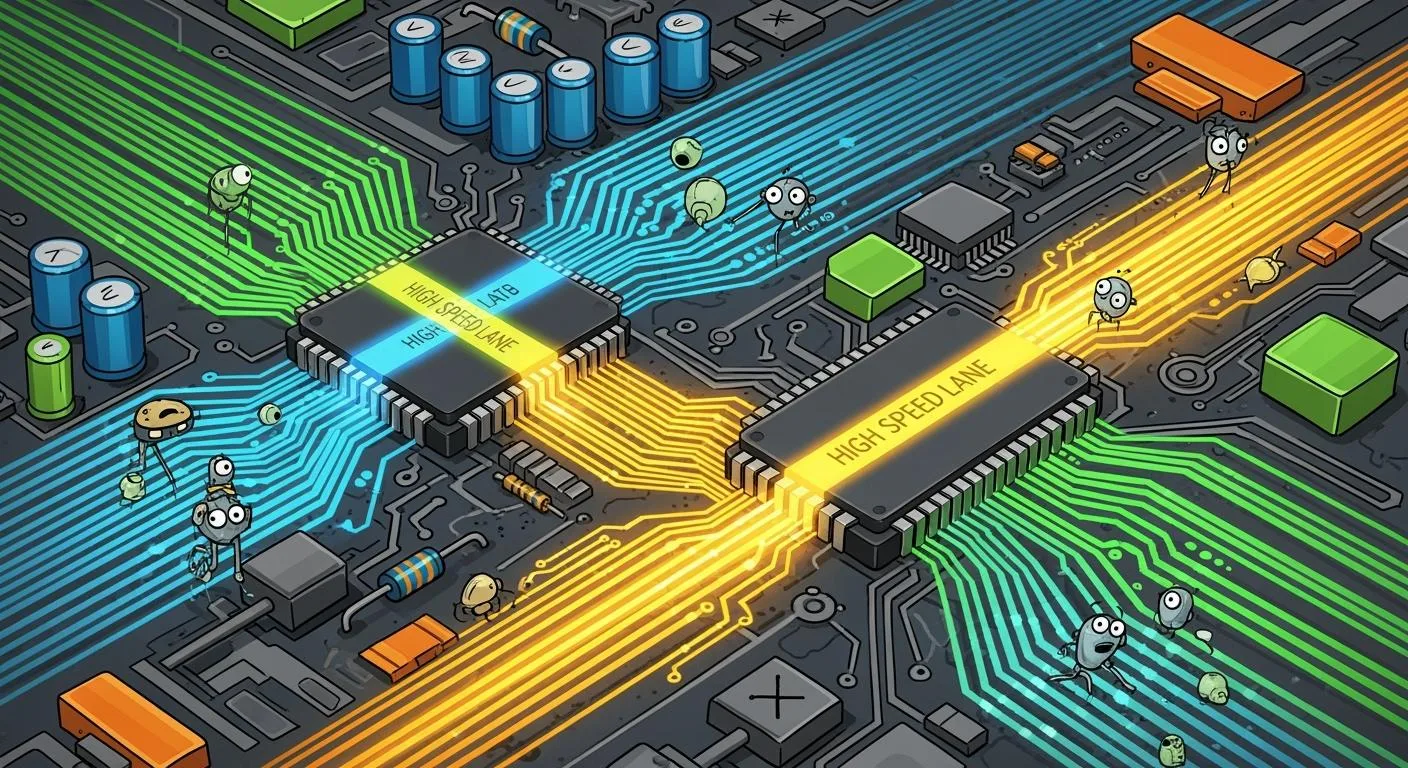
SerDes technology has become a fundamental part of modern high-speed digital communication. The term describes Serializer/Deserializer circuitry, which converts parallel data into a serial stream for transmission and changes received serial data back into parallel form. This approach allows electronic systems to transfer substantial amounts of information efficiently while reducing the number of physical connections required between processors, integrated circuits, networking devices and other hardware components.
As computing systems become faster and more complex, moving information reliably between components becomes increasingly challenging. Wide parallel buses can require numerous pins and circuit-board traces, while differences in signal timing may become harder to control at higher speeds. SerDes provides an effective alternative by transmitting information through fewer high-speed serial channels, making it valuable across data centres, telecommunications, automotive electronics, consumer devices and high-performance computing systems.
What Is SerDes?
SerDes stands for Serializer/Deserializer and refers to functional circuitry used for high-speed data communication. At the transmitting end, the serializer receives several bits of parallel information and converts them into a sequential serial data stream. This stream travels through a communication channel before reaching the receiving end, where the deserializer reconstructs the information into a parallel format that the destination hardware can process.
The technology is particularly useful when systems need substantial bandwidth but designers want to minimise the number of physical connections. Instead of transmitting many bits simultaneously across separate traces, SerDes sends information sequentially at much higher speeds. This can simplify printed circuit board routing, reduce I/O pin requirements and help engineers design compact systems capable of handling demanding communication workloads without relying on increasingly wide parallel interfaces.
How Does SerDes Work?
The SerDes process begins with parallel information entering the transmitter. A serializer collects these bits and organises them into a high-speed serial sequence. Depending on the implementation, additional processing such as encoding or scrambling may occur before transmission. The resulting signal then travels through a physical channel, which could include PCB traces, cables or other interconnects connecting separate components within or between electronic systems.
At the receiving end, the deserializer performs the reverse process. The receiver detects the incoming serial signal, establishes appropriate timing and reconstructs the transmitted information. Clock and Data Recovery, commonly known as CDR, is especially important in many architectures because it helps recover timing from the incoming data. After processing and decoding, the reconstructed parallel information can be delivered to the receiving device for further computation or communication.
SerDes Architecture and Key Components
A typical SerDes architecture contains transmitter and receiver sections supported by specialised circuitry for timing, signal conditioning and data processing. The transmitter may include parallel-to-serial conversion, clock generation and output drivers, while the receiver can contain input conditioning, Clock and Data Recovery and serial-to-parallel conversion. Together, these components create a complete communication path capable of operating at high data rates while maintaining reliable transfer between connected devices.
Phase-Locked Loops, commonly called PLLs, can provide accurate clock generation, while equalisation techniques help compensate for signal degradation caused by the communication channel. Continuous-Time Linear Equalisation and Decision Feedback Equalisation, often abbreviated as CTLE and DFE, are examples used in high-speed receiver designs. Depending on the system, Physical Coding Sublayer and Physical Medium Attachment functions may also work alongside the core serializer and deserializer circuitry.
Types of SerDes
Different SerDes architectures exist because communication requirements vary considerably between applications. Designs may use embedded clocking, reference clocks, parallel clocks or different data-interleaving techniques. Embedded-clock approaches allow timing information to be recovered from transmitted data, while other implementations may rely on a shared or separate reference clock. The exact architecture depends on factors such as transmission speed, protocol requirements, communication distance, available power and acceptable implementation complexity.
Engineers must therefore select a design that suits the intended hardware rather than treating every serializer/deserializer implementation as interchangeable. A data-centre networking interface may have different requirements from an automotive camera connection or consumer display interface. Factors including channel loss, latency, bandwidth and signal integrity influence the choice. Modern high-speed designs often combine sophisticated clock recovery and equalisation technologies to maintain dependable communication as signalling rates continue increasing.
SerDes Applications
SerDes is widely used in computing and networking environments where large quantities of data need to move rapidly between electronic components. High-performance processors, GPUs, AI accelerators, networking switches, servers, FPGAs and ASICs can rely on high-speed serial links. PCI Express and Ethernet implementations are important examples of technologies that use serial communication, enabling substantial bandwidth without requiring extremely wide collections of parallel connections between devices.
Automotive electronics represent another important application area. Modern vehicles increasingly incorporate high-resolution cameras, infotainment displays, sensors and advanced driver-assistance systems that generate substantial volumes of information. High-speed serial technologies can support connections required by these systems, including implementations associated with interfaces such as GMSL and FPD-Link. Similar principles also appear across telecommunications equipment, storage systems, industrial electronics and consumer products requiring reliable high-bandwidth data transfer.
Benefits of SerDes Technology
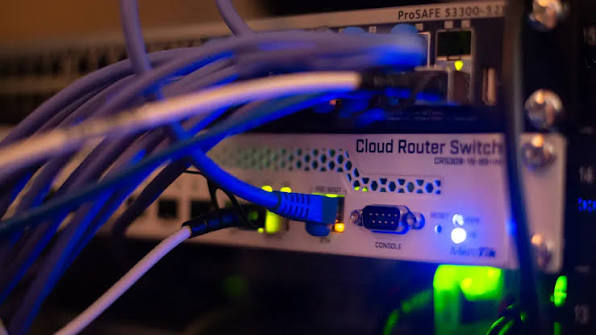
One significant SerDes benefit is the reduction in physical I/O connections required to move information. Fewer pins and PCB traces can simplify board layouts, reduce routing congestion and potentially make complex electronic designs more manageable. Serial links can also provide considerable bandwidth by operating at very high signalling rates, allowing engineers to transfer substantial quantities of data through a comparatively small number of communication lanes.
The technology also addresses challenges associated with high-speed parallel transmission. Parallel buses require multiple signals to arrive within tightly controlled timing windows, and differences between individual paths can create skew. By serialising data, designers can reduce some of these timing difficulties while using signal-processing techniques to maintain communication quality. These advantages have helped high-speed serial interfaces become increasingly prominent as modern electronic systems demand greater performance and bandwidth.
SerDes Design Challenges
Despite its advantages, SerDes introduces engineering challenges that become increasingly important as data rates rise. High-frequency signals can experience attenuation, reflections, jitter, noise and crosstalk while travelling through PCB traces, connectors or cables. These effects can distort the transmitted waveform and make accurate data recovery more difficult. Careful channel design and signal-integrity analysis are therefore essential when engineers develop reliable high-speed communication links for demanding applications.
Equalisation and clock recovery can help overcome these limitations, but they add complexity to transmitter and receiver designs. Engineers must also consider power consumption, electromagnetic interference, thermal performance and testing requirements. As signalling speeds increase, seemingly small imperfections in the communication channel may become significant. Successful implementations therefore require careful coordination between integrated-circuit design, package design, PCB layout, channel modelling and system-level validation.
SerDes vs Parallel Communication
The fundamental difference between SerDes and parallel communication concerns how data moves between components. A parallel interface sends multiple bits simultaneously across several physical connections, potentially providing straightforward communication at lower speeds. However, increasing the width and frequency of a parallel bus can create routing congestion, timing skew and signal-integrity difficulties, particularly when signals must travel across larger distances or complex printed circuit boards.
Serial communication takes a different approach by sending bits sequentially at a considerably higher signalling rate. This reduces the number of required connections while allowing substantial overall bandwidth. Although serial links introduce additional requirements such as clock recovery and equalisation, their scalability makes them attractive for modern high-performance hardware. Consequently, many technologies have moved towards high-speed serial links rather than continuously expanding traditional parallel interfaces.
SerDes vs Ethernet, PCIe and PHY
SerDes should not be considered a direct alternative to Ethernet or PCI Express because these terms describe different layers or aspects of communication technology. Ethernet represents a family of networking standards, while PCIe defines a high-speed interconnect architecture widely used inside computing systems. Both can rely on high-speed serial physical signalling, where serializer and deserializer functions help transform and recover the data transmitted across individual lanes.
The relationship between SerDes and PHY can also cause confusion. A PHY is generally responsible for physical-layer communication functions and may include several specialised components required to transmit and receive signals over a particular medium. Serializer/deserializer circuitry can form part of that physical-layer implementation. Therefore, understanding their relationship is more useful than treating PHY and serializer/deserializer technology as two completely competing solutions.
Why SerDes Matters for Modern Technology
Modern computing depends on rapidly moving information between processors, memory-related subsystems, accelerators, storage devices and networking equipment. Artificial intelligence workloads and cloud infrastructure can create particularly demanding bandwidth requirements. SerDes helps address these requirements by enabling high-speed point-to-point communication without requiring an impractical number of physical pins and traces, supporting increasingly powerful hardware while keeping interconnect designs comparatively manageable.
Its importance is likely to continue as data rates increase across computing, networking and automotive applications. Future systems will require greater bandwidth while facing strict limits involving power, space and signal quality. Improvements in equalisation, modulation, clock recovery and semiconductor design can help serial links operate at increasingly demanding speeds, ensuring serializer/deserializer technology remains an important foundation for next-generation digital communication.
Conclusion
SerDes provides a practical foundation for high-speed communication by converting parallel information into serial data for transmission and reconstructing it at the destination. Its architecture brings together serializer, deserializer, timing, clock recovery and signal-conditioning functions. By reducing physical connection requirements while supporting substantial bandwidth, the technology addresses many limitations that emerge when traditional parallel interfaces are pushed towards increasingly demanding operating speeds.
From PCI Express and Ethernet systems to FPGAs, ASICs, data centres and automotive electronics, SerDes supports many technologies used every day. Understanding its meaning, architecture, working process and applications provides valuable insight into modern digital hardware. As processors and communication systems continue demanding faster connections, efficient high-speed serial transmission will remain an essential part of electronic design and technological development.
Frequently Asked Questions
What does SerDes mean?
SerDes means Serializer/Deserializer. It refers to circuitry that converts parallel information into a serial data stream for transmission and converts incoming serial information back into parallel data at the receiving end.
What is SerDes used for?
It is used for high-speed data transfer in computing, networking, telecommunications, automotive electronics and other digital systems where substantial bandwidth and fewer physical connections are desirable.
How does SerDes work?
A serializer converts parallel information into a high-speed serial stream. The receiver captures that signal, recovers the required timing and uses a deserializer to reconstruct the original parallel information.
What is the difference between SerDes and Ethernet?
Ethernet is a family of networking standards, whereas serializer/deserializer circuitry provides data-conversion functions that may be used within the physical implementation of high-speed Ethernet communication.
articular interface, while serializer/deserializer circuitry can form one part of the PHY architecture responsible for transmitting and receiving high-speed serial information.
You May Also Read: Kieran Whately