
Sulcus Terminalis: Anatomy, Location, Functions, and Clinical Significance
The human body contains many specialised anatomical landmarks that help medical professionals understand the relationship between different structures. One such important landmark is the sulcus terminalis, which refers to a groove or boundary found in two significant areas: the heart and the tongue. Although these structures are located in different organs, both have important roles in understanding human anatomy, development, and clinical studies.
The study of the sulcus terminalis is valuable for medical students, healthcare professionals, and anyone interested in human biology. In the heart, it identifies a division on the right atrium and provides important information about cardiac organisation. In the tongue, it represents a developmental boundary that separates regions with different functions and nerve supplies.
What Is Sulcus Terminalis?
The sulcus terminalis is an anatomical groove that marks a transition between two different regions of a structure. In medical terminology, the word “sulcus” refers to a groove, depression, or furrow, while “terminalis” indicates a boundary or dividing point. This type of anatomical landmark helps doctors and students identify specific areas within complex organs.
The term sulcus terminalis does not refer to only one structure because it is used in both cardiac and tongue anatomy. The sulcus terminalis of the heart is found on the outer surface of the right atrium, while the sulcus terminalis of the tongue appears as a V-shaped groove on the upper surface of the tongue. Understanding both meanings is essential for a complete view of this anatomical term.
Sulcus Terminalis of the Heart
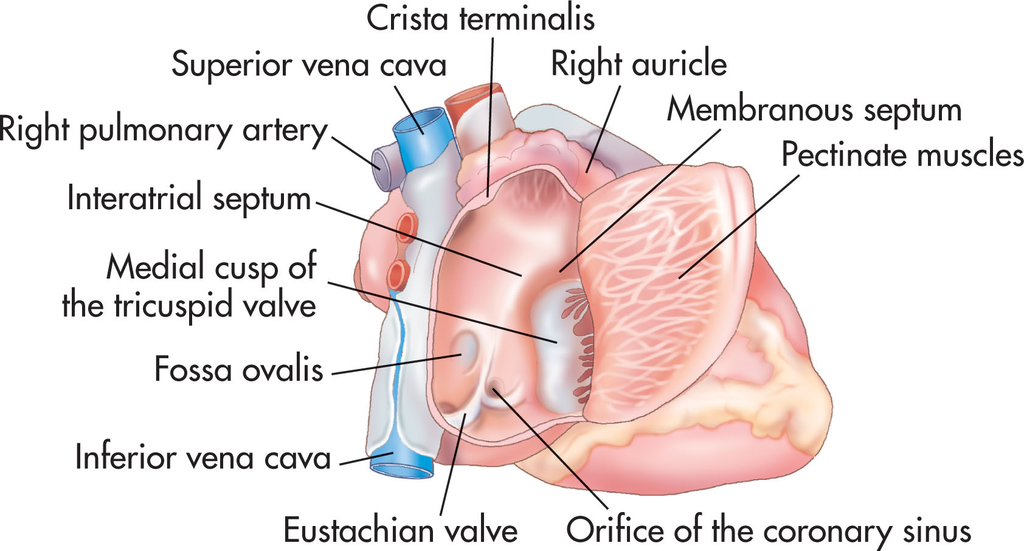
The cardiac sulcus terminalis, also known as sulcus terminalis cordis, is a shallow vertical groove located on the external surface of the right atrium. It extends from the front area of the superior vena cava towards the inferior vena cava, creating a visible landmark on the surface of the heart.
This groove represents the separation between two different embryological parts of the right atrium. One side contains the smooth-walled sinus venarum, which develops from the sinus venosus, while the other side contains the trabeculated region of the primitive atrium. This distinction makes the sulcus terminalis an important feature in cardiac anatomy.
Location and Structure of Cardiac Sulcus Terminalis
The location of the sulcus terminalis is important because it provides a clear external indication of internal cardiac organisation. On the right side of the heart, this groove follows a vertical pathway and corresponds internally with another structure called the crista terminalis.
The sulcus terminalis separates areas of the right atrium that have different appearances and developmental origins. The smooth posterior portion receives blood returning from the major veins, while the anterior portion contains muscular ridges called pectinate muscles. This arrangement helps explain the complex structure of the right atrium.
Function and Clinical Importance of Sulcus Terminalis in the Heart
Although the sulcus terminalis does not directly control heart activity, it serves as an important anatomical guide. It helps healthcare professionals identify the position of important cardiac structures and understand the organisation of the right atrium during examinations and procedures.
The sulcus terminalis is clinically significant because the sinoatrial node, which functions as the natural pacemaker of the heart, is typically located near the upper part of this groove. Understanding this relationship is important during cardiac imaging, electrophysiological studies, and surgical procedures involving the atrial region.
Sulcus Terminalis of the Tongue
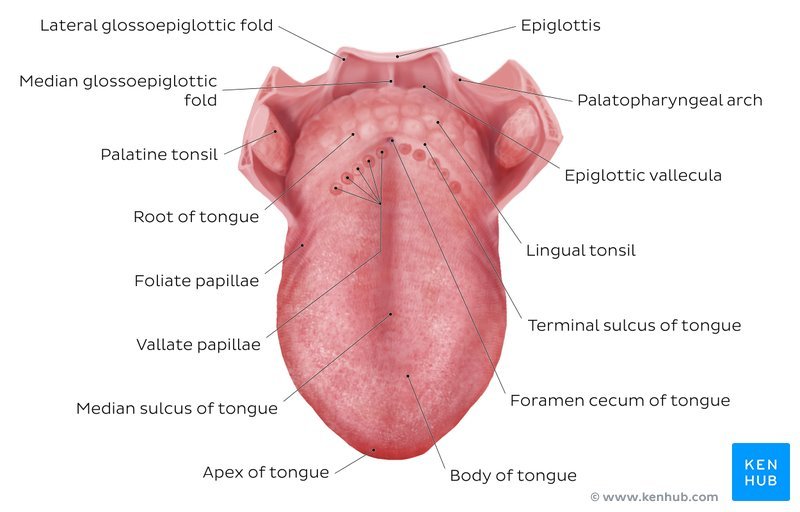
The sulcus terminalis of the tongue is a V-shaped groove located on the dorsal surface of the tongue. It marks the boundary between the anterior two-thirds of the tongue, known as the oral part, and the posterior one-third, known as the pharyngeal part.
The apex of the sulcus terminalis points backwards towards the foramen caecum, which is a small depression located near the middle of the tongue. This region is an important embryological landmark because it is connected with the early development of the thyroid gland through the thyroglossal duct pathway.
Function and Nerve Supply of Tongue Sulcus Terminalis
The sulcus terminalis of the tongue plays an important role in identifying areas with different sensory functions. The front two-thirds of the tongue and the back one-third develop differently and receive nerve supply from separate cranial nerves.
The anterior region receives general sensation mainly through the lingual nerve, which is associated with the trigeminal nerve. Taste sensation in this region is carried through branches connected with the facial nerve. Behind the sulcus terminalis, the posterior third receives sensation and taste information mainly through the glossopharyngeal nerve.
Embryological Significance of Sulcus Terminalis
The sulcus terminalis provides important clues about human development before birth. In the heart, it represents the boundary created during the transformation of embryonic heart structures into the mature right atrium. The division between the sinus venosus and primitive atrium remains visible through this anatomical landmark.
In the tongue, the sulcus terminalis reflects the meeting point between different developmental regions. Understanding this embryological background helps explain why the tongue has separate areas with different nerve supplies and functions. Medical students often study this structure because it demonstrates how early development influences adult anatomy.
Difference Between Sulcus Terminalis and Crista Terminalis
The sulcus terminalis and crista terminalis are closely connected structures in the heart, but they are not the same. The sulcus terminalis is an external groove visible on the outer surface of the right atrium, whereas the crista terminalis is an internal muscular ridge found inside the right atrium.
The relationship between these two structures can sometimes cause confusion among students. The internal crista terminalis corresponds with the external sulcus terminalis, meaning they represent the same anatomical boundary from different viewpoints. Learning this difference is important for understanding cardiac anatomy accurately.
Clinical Significance of Sulcus Terminalis
The clinical importance of the sulcus terminalis extends across different areas of medicine. In cardiology, this structure provides a useful reference point for understanding atrial anatomy and locating important regions involved in electrical activity.
Medical imaging specialists use knowledge of the sulcus terminalis when interpreting heart scans and identifying normal anatomical features. Surgeons also consider this region during procedures involving the right atrium because nearby structures can be clinically important.
In tongue anatomy, the sulcus terminalis helps healthcare professionals understand nerve distribution, developmental abnormalities, and changes affecting sensation or taste. This makes it an important structure in both anatomical education and clinical practice.
Conclusion
The sulcus terminalis is an important anatomical landmark that helps explain the organisation, development, and function of different parts of the human body. Although the term is used for both the heart and tongue, each location has unique characteristics and clinical importance.
In the heart, the sulcus terminalis marks the boundary between different regions of the right atrium and provides a guide for understanding cardiac structures. In the tongue, it separates areas with different developmental origins and nerve supplies. Learning about the sulcus terminalis provides valuable insight into human anatomy and its relevance in medicine.
Frequently Asked Questions
What is the sulcus terminalis?
The sulcus terminalis is an anatomical groove that separates different regions of the heart and tongue.
Where is the sulcus terminalis located in the heart?
It is located on the outer surface of the right atrium between the superior and inferior vena cava.
What is the main function of the sulcus terminalis?
Its main role is to mark anatomical boundaries and help identify important structures.
What is the difference between sulcus terminalis and crista terminalis?
The sulcus terminalis is an external groove, while the crista terminalis is an internal muscular ridge.
Where can the sulcus terminalis be found on the tongue?
It is located on the upper surface of the tongue and separates the front and back regions.
You May Also Read: Hugger Mugger Bolster
